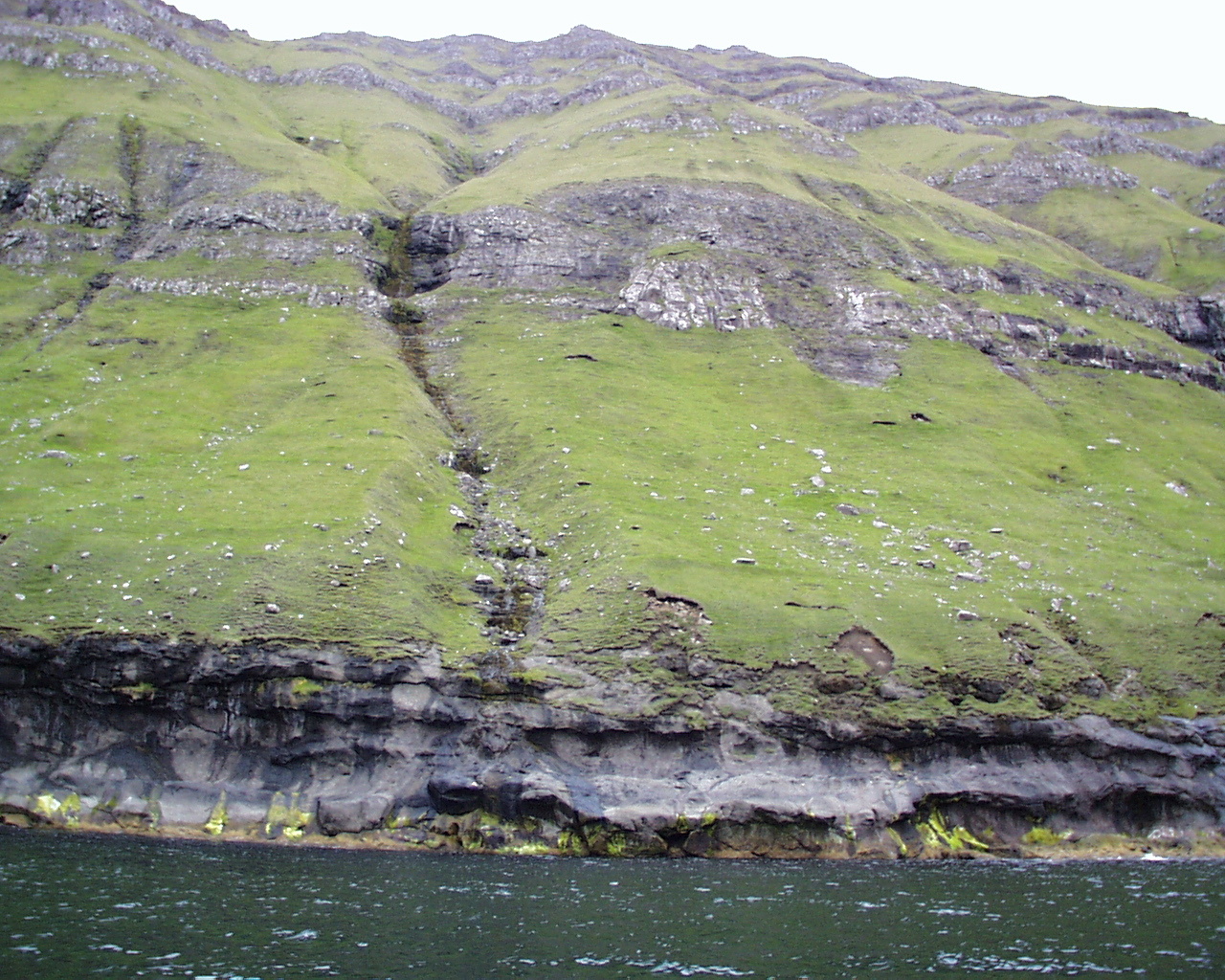
Faroe rock (Føroyakletturin) to the left of the stream by the coast.
The Faroese nationalist politician and poet Jóannes Paturson (1866-1846), who wrote the History of the Faroe Islands “Føroya søga” (1929), has two accounts of the settlement period, both from Funningur and from the neighbouring village Gjógv.
The named sources from Funningur say: “The Landnam people (the settlers) drifted along the flow into Funning fjord. They moored the ship at “Funningslíð” (the sloping mountainside on the northern side of the settlement) at a place they called Faroe Rock (Føroyaklettur). There was a stream where they filled their water containers, and they called this stream the Faroe stream “Føroya Á”. They called the place “Føroyar” the Faroe Islands, as it is still called. Next they went further along the fjord and settled in the place they called Funningur. Land had been found.”
A named source from Gjógv has almost the same account: “Grímur Kamban docked at Funningslíð by a stream he called Føroya á. He saw a great flock of sheep graze at the top of a slope.

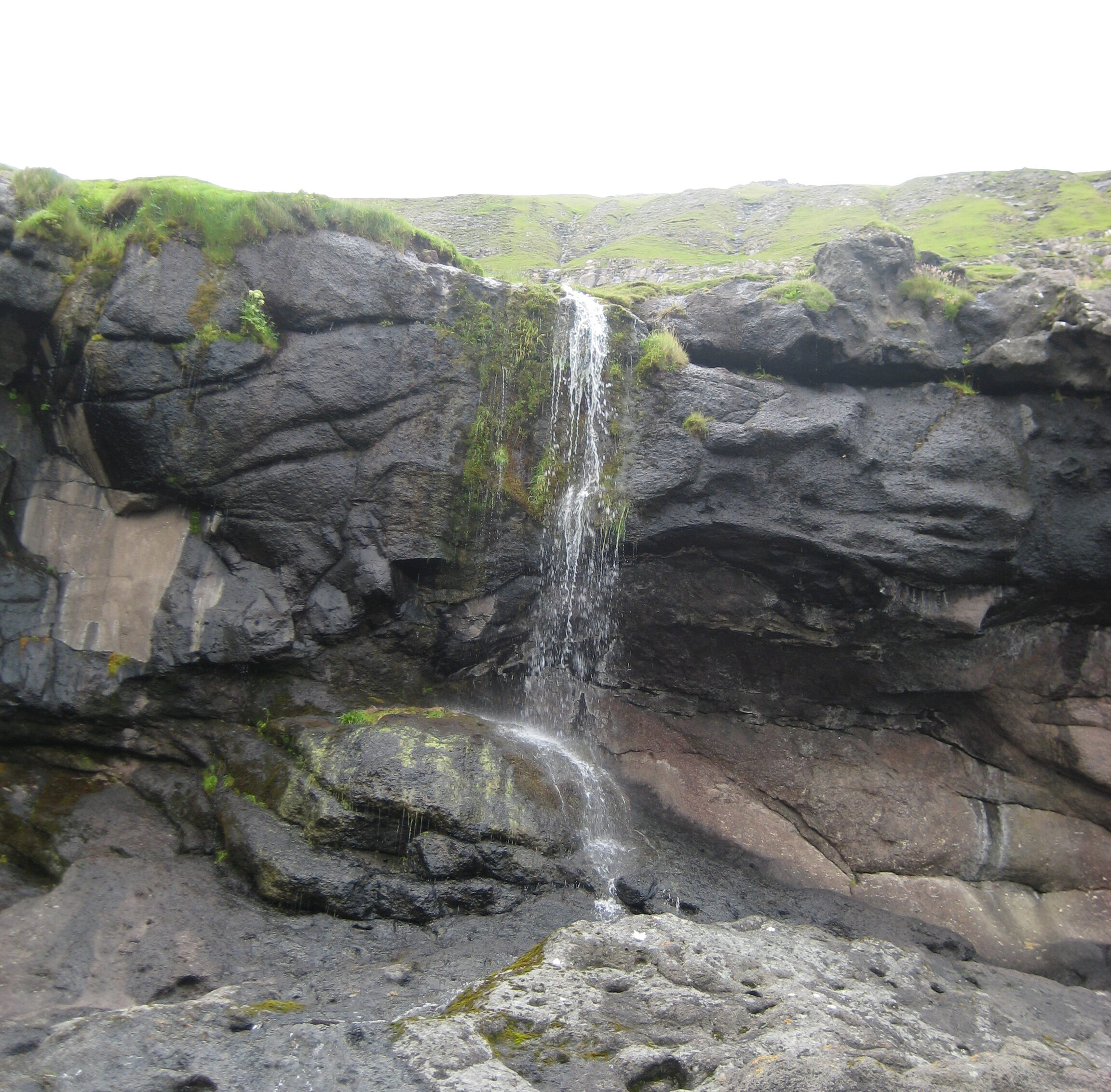
From Gjógv we also have other sources and stories. Locals there say that Grímur Kamban took water from another stream further into the fjord, Ferjá.
It can be added that people from Funningur call the area “out by the Faroe Islands”. A man from Funningur, b. 1895, relayed ancestral legend that they used to fish for red cod “Úti undir Føroyum” (Out by the Faroe Islands) and that he also used this name himself.
Place names are valuable, and they are often in reference to something – some incident or story. The place names from this area at the far end of the Funningsfjord are quite appropriate, as they so perfectly fit the tale of Grímur Kamban and the landnam time. That these place names have lived in oral tradition ever since the settlement period in itself tells a unique story. Known only by locals they are in themselves both descriptive and the places worth a visit. Moreover they have deserved to come to light and be rediscovered. The hike from Funningur and along Líðarbakka (the mountain slope to the north) can be recommended for anyone – it is rich in history. The area is low-lying and a hike takes about an hour each way.
A legend is a legend, and so it will remain.